
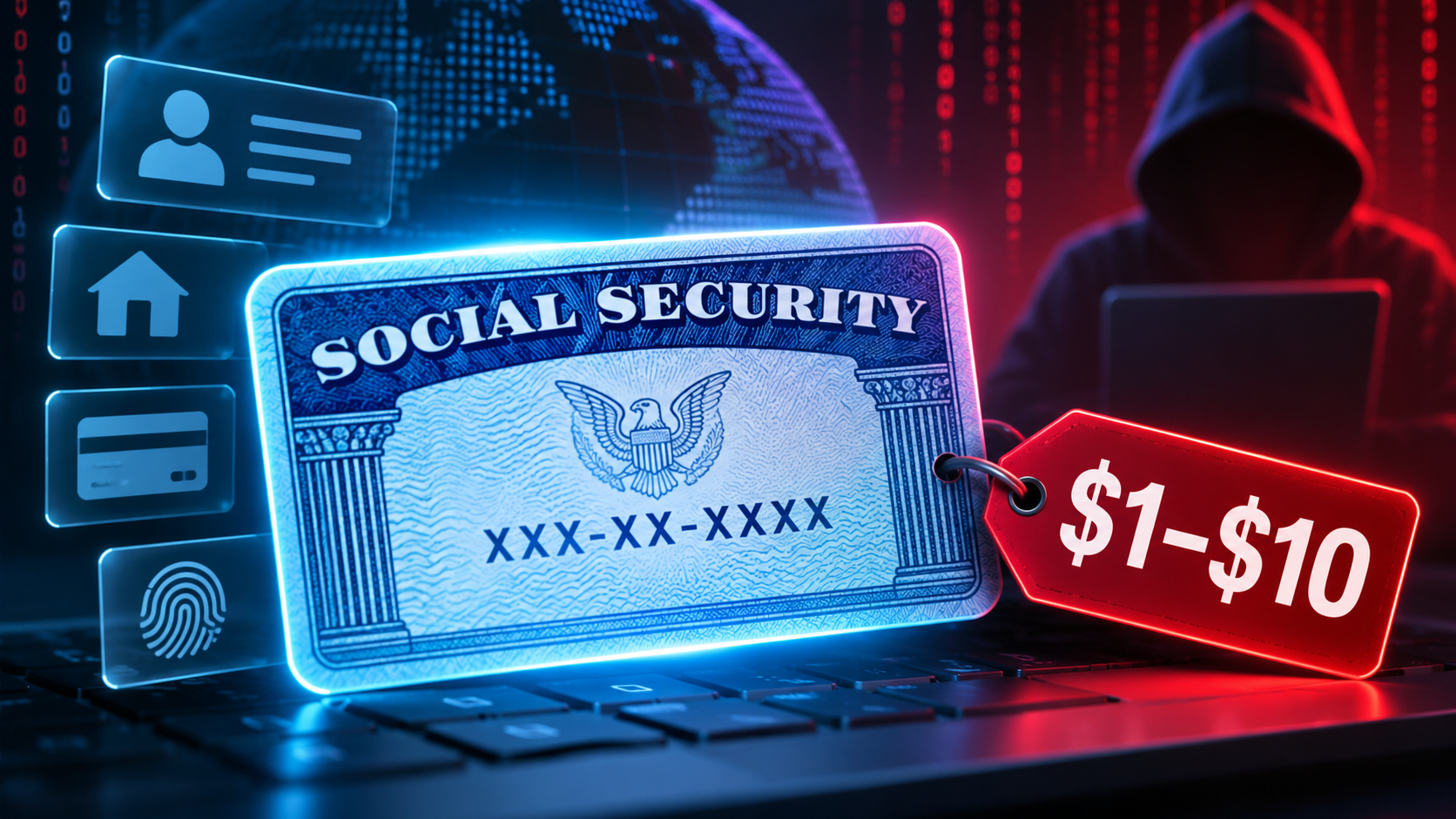
How Much Is Your Identity Really Worth?
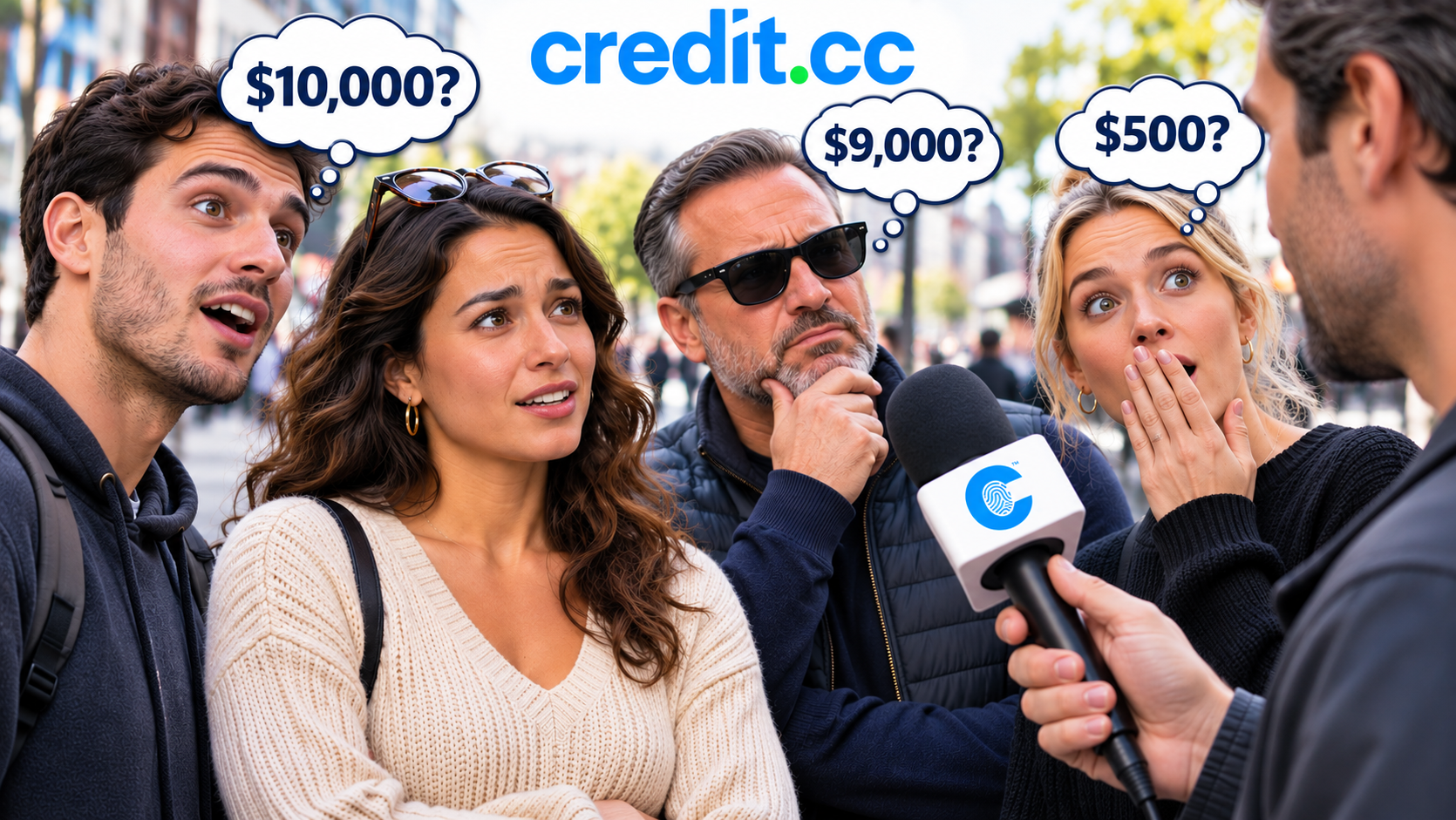
Imagine someone stopping you on the street and asking a simple question:
"How much do you think your Social Security number is worth on the dark web?"
Would you guess $10,000? Maybe $5,000? Surely something as important as your Social Security number must be worth hundreds of dollars.
The reality is far more unsettling.
A stolen Social Security number can sometimes be offered for as little as $1 to $10 in underground markets.
That's less than the price of a sandwich.
But here's what makes this particularly disturbing: the price criminals pay for your information has almost nothing to do with the damage they can cause using it.
Why Would Criminals Sell Your SSN So Cheaply?
Your Social Security number is supposed to be one of your most closely guarded pieces of personal information.
Unfortunately, massive data breaches have exposed sensitive information belonging to millions of Americans.
When stolen information circulates widely, it can become a commodity. Criminals may sell individual records or entire databases containing names, addresses, birth dates, and Social Security numbers.
The more widely available the information becomes, the less buyers may be willing to pay for it.
Think of it this way: something can be inexpensive to purchase but extremely expensive for its rightful owner to lose.
What Can Someone Do With Your Stolen SSN?
A Social Security number alone does not automatically give a criminal access to your money. But when combined with other personal information, it can help facilitate serious identity fraud.
1. Apply for Credit in Your Name
Criminals may attempt to open credit cards, personal loans, or financing accounts using stolen identity information.
You might not discover the fraud until an unfamiliar account appears on your credit report or a collection agency contacts you.
2. Commit Tax-Related Identity Theft
Fraudsters may use stolen personal information to submit fraudulent tax returns and attempt to claim refunds.
3. Open Fraudulent Financial Accounts
Stolen identity information may be used to bypass certain account-opening checks, especially when criminals possess multiple pieces of identifying information.
4. Impersonate You
Criminals may combine your SSN with your date of birth, address, or other details to impersonate you during financial transactions or account recovery attempts.
5. Resell Your Identity
Your information may be bought, resold, bundled with additional records, or circulated repeatedly.
A single data breach can create risks that persist for years.
Your SSN Might Cost $5. Recovering Your Identity Could Cost Far More.
This is the difference between the market price of stolen data and its potential consequences.
An SSN might sell for a few dollars, but identity theft can result in financial losses, damaged credit, hours of paperwork, disputed accounts, and prolonged stress.
Unlike a password, a Social Security number is not something you can routinely change.
Even after fraudulent accounts are closed, stolen identity information may continue circulating.
How Can You Protect Yourself?
You cannot control every company that stores your personal information. But you can take meaningful steps to reduce your exposure and respond more quickly to suspicious activity.
Monitor your credit reports. Look for unfamiliar accounts, unexpected inquiries, and changes you don't recognize.
Consider freezing your credit. A security freeze at Equifax, Experian, and TransUnion can help prevent unauthorized new credit accounts. Freezes are free and can be temporarily lifted when needed.
Protect your online accounts. Use unique passwords and multifactor authentication, preferably phishing-resistant methods when available.
Watch for identity exposure. Dark web monitoring services may alert you when certain personal information appears in monitored sources. No monitoring service can search every underground marketplace or guarantee detection.
Respond quickly to suspected fraud. Visit IdentityTheft.gov to report identity theft and receive a recovery plan.
Your Identity Is Worth More Than Its Dark Web Price.
The most dangerous misconception about identity theft is believing that criminals need to spend a fortune to steal someone's identity.
They don't.
Sometimes all it takes is a few dollars, stolen information, and an opportunity.
You cannot always prevent your information from being exposed. But you can take steps to monitor for warning signs and protect your financial identity.
Don't Wait Until Identity Theft Becomes Your Problem.
We offer credit and identity monitoring features designed to help you stay informed about potential risks and suspicious activity.
Can a service remove your SSN from the dark web?
Do not confuse monitoring with erasing stolen information.
Dark web monitoring can help identify exposure in covered sources. It cannot guarantee that every copy of stolen data will be found or removed. Information may already have been copied or shared elsewhere. [3]
A privacy scan serves a different purpose: it looks for personal details on data broker and people-search websites. Credit.CC™ offers a free privacy scan at credit.cc/privacy-protect. That page describes a data broker scan, not a free SSN dark web scan. [5]
How Credit.CC™ fits into your protection routine
Credit.CC™ lists dark web monitoring for Social Security numbers and personal information in its subscription plans, alongside credit monitoring and FICO® Score 8 access. Bureau coverage and score refresh schedules vary by plan. [6]
Review the included features and billing terms before enrolling. Monitoring can add awareness, but it works alongside practical habits such as freezing your credit, checking accounts, and responding to suspicious activity.
Your identity matters more than a criminal's price tag
You do not need to know an exact underground price to take your information seriously.
Start with the free protective steps above. Then decide whether ongoing monitoring belongs in your routine.
A stolen record may be cheap. Your identity deserves attention.
Explore Credit.CC™ plans for dark web and credit monitoring.
Sources
Government Technology — Report: Your Social Security Number Costs Less Than a Big Mac. Reporting on Coveron/NordLayer Intelligence research; listed prices are observations, not verified transaction prices or a universal market rate.
Social Security Administration — What You Can Do To Protect Your Personal Information.
Experian — Here's What Your Data Sells for on the Dark Web and LifeLock — What to do if your Social Security number is on the dark web.