
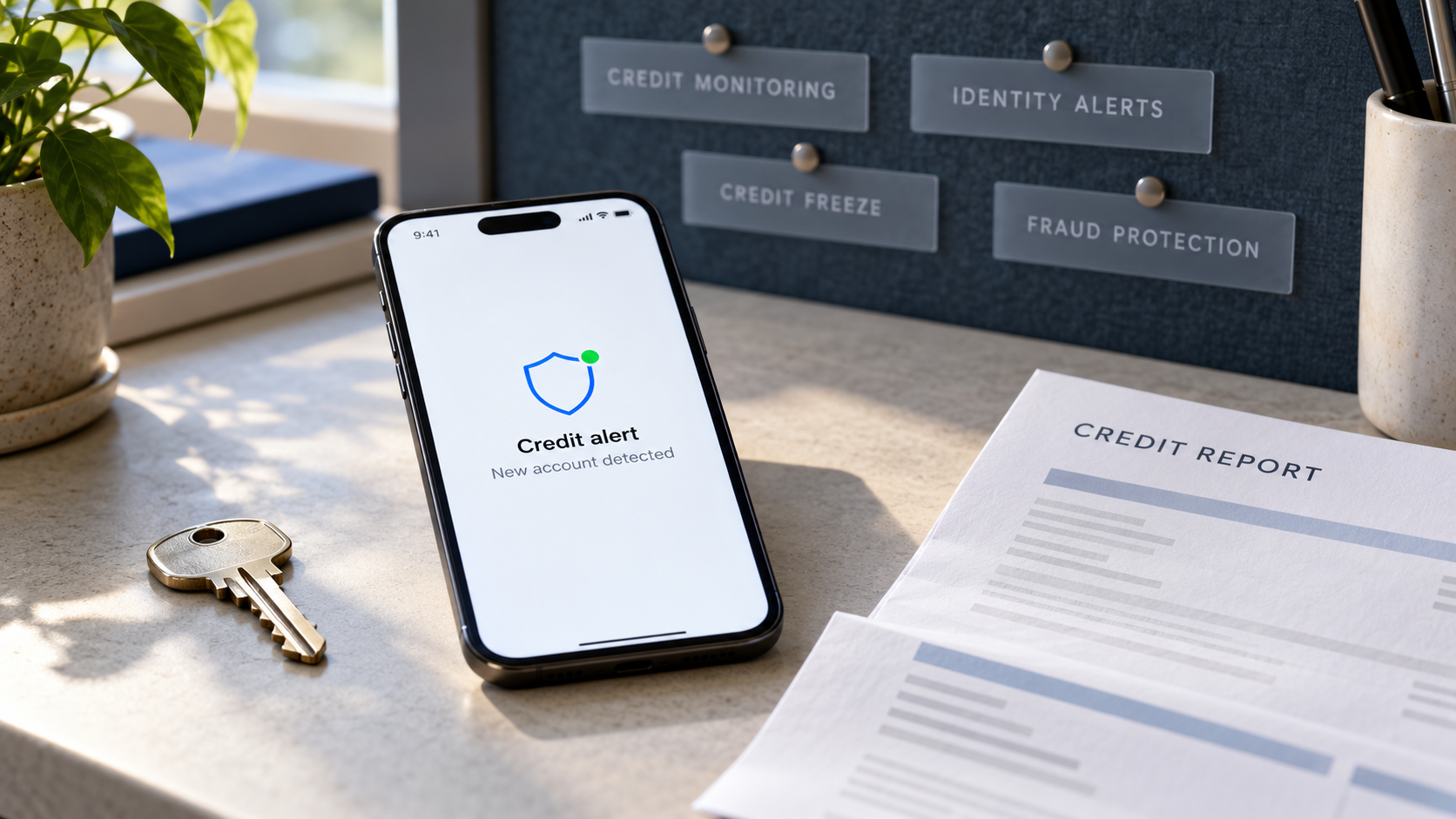
Is LifeLock or Other Credit Monitoring Necessary
Free credit monitoring can cover the basics. Here’s how to decide whether paid identity theft protection adds enough value for your situation.
By Abel | Credit.CC
Your bank shows you a credit score. Your credit card sends transaction alerts. Then an ad for LifeLock appears, and you wonder: am I missing something—or would I just be paying for what I already have?
For many people, free tools cover a useful part of the job. Paid protection can add broader monitoring and help with recovery. Whether it is worth paying for depends on what you already have, what the plan actually includes, and how much you want to manage yourself.
Disclosure: This article is published by Credit.CC, which offers credit and identity protection services.
Credit monitoring and identity protection do different jobs
Credit monitoring watches for changes in your credit file. An unfamiliar inquiry or newly reported account could be a reason to investigate.
Identity monitoring looks beyond your credit report. Depending on the service, it may watch for personal information appearing in certain public records, identity databases, or sources associated with stolen data. Some plans also provide recovery assistance.
That distinction matters. A credit alert does not tell you about every possible misuse of your identity, and an identity protection subscription cannot guarantee that fraud will never happen.
What can you do for free?
Quite a bit.
You can review your credit reports from Equifax, Experian, and TransUnion for free every week through AnnualCreditReport.com. Reviewing all three helps you check for unfamiliar accounts, incorrect details, and other changes worth investigating.
You can also place a security freeze with each of the three bureaus for free. A freeze restricts access to your credit file and generally helps prevent new credit accounts from being opened in your name. You can temporarily lift it when you need to apply for credit.
Some banks and credit card providers also offer free credit scores. Before buying another service, check what your existing accounts already provide. A score alone, however, is different from a service that monitors changes and sends alerts.
What are you paying for?
The useful question is: what does this subscription add to the tools I already use?
Depending on the plan, that could include:
- Monitoring across more credit bureaus.
- Identity alerts beyond changes to your credit report.
- Access to recovery specialists.
- Insurance or reimbursement benefits, subject to policy terms.
LifeLock offers different combinations of monitoring, restoration support, and coverage. Benefits vary by plan, so compare the specific subscription you would buy rather than relying on the brand name alone.
The same approach applies when comparing any provider, including Credit.CC.
Recovery assistance deserves a closer look
It is easy to compare dashboards and alert lists. The harder question is what happens when an alert turns out to be real.
Will someone explain the next steps? Help prepare documents? Work with creditors on your behalf when authorized? Or simply direct you to a help page?
Recovery services differ. Some provide guidance; others may take a more active role after you grant permission. Free help is also available through IdentityTheft.gov, where you can report identity theft and get a recovery plan.
Consider how much help you would want if you were dealing with unfamiliar accounts while also managing work and family responsibilities.
Read the insurance details
A large coverage number can catch your attention without explaining what would actually qualify for reimbursement.
Before subscribing, check:
- Which losses and expenses are covered.
- Whether stolen funds are included.
- Any deductibles, exclusions, or separate benefit limits.
- The documentation required to make a claim.
Recovery expenses and stolen-money reimbursement are different benefits. Do not assume a headline coverage amount applies equally to every kind of loss.
When might free tools be enough?
A free approach may suit you if you are comfortable reviewing your reports, maintaining credit freezes, and investigating unfamiliar activity yourself.
It takes some ongoing attention. Decide when you will check your reports and make sure you know how to access your bureau accounts when you need to lift a freeze.
There is no reason to buy a subscription simply because a familiar name appears in an advertisement.
When might paid protection be worth it?
Paid protection may be worthwhile if you want a more convenient way to watch for problems, broader monitoring than your current tools provide, or access to recovery assistance.
Treat those as specific benefits to evaluate. Ask yourself:
- Does this plan fill a gap in my existing coverage?
- Will I read and act on its alerts?
- Is the recovery support useful to me?
- Am I comfortable with the ongoing cost?
A long feature list is less useful than a few services you understand and will actually use.
So, is LifeLock necessary?
No. You do not need LifeLock—or another paid subscription—to begin protecting your credit.
Free reports and security freezes give you meaningful tools. Paid services can add convenience, broader monitoring, and recovery support, depending on the plan.
Before paying, inventory what you already have. Then compare the remaining gaps, the actual benefits, and the full subscription cost.
The goal is to choose an approach you understand and can keep using.